United States
 United Kingdom

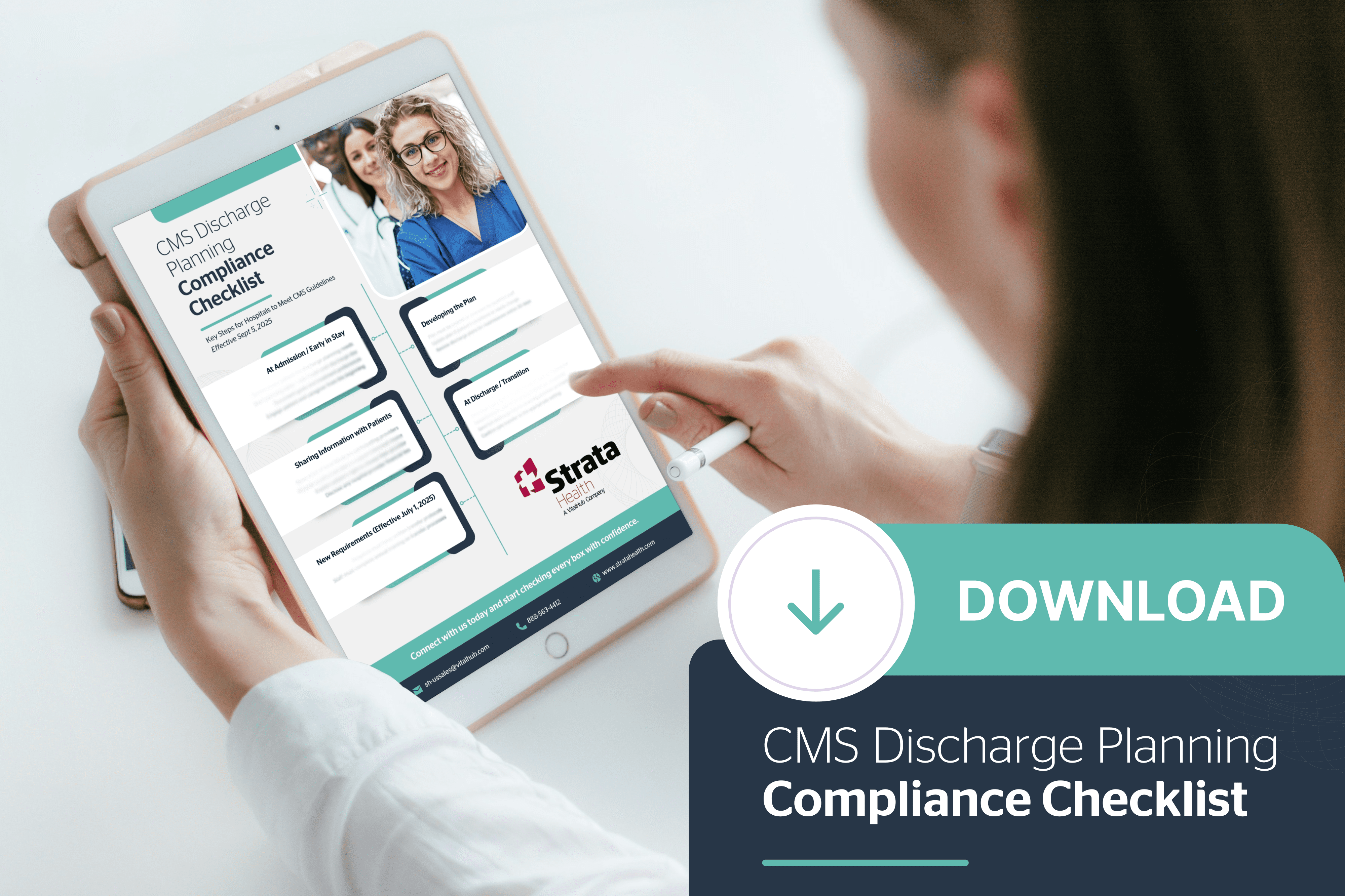
As of September 5, 2025, CMS updated the State Operations Manual Appendix A, also known as the interpretive guidelines for CoP § 482.43 – Discharge Planning. The update now provides Interpretive Guidelines for surveyors and health systems/hospitals tied to the Discharge Planning updates that occurred in 2019.
Although the guidance may not be as robust or direct as anticipated, the following key highlights offer useful insights:
What’s Included
1. Patients at the Center
- Discharge planning must focus on patient goals and treatment preferences.
- Patients and their caregivers must be actively involved in the plan.
- The goal is to ensure safe transitions and reduce avoidable readmissions.
2. Start Planning Early
- Discharge planning should begin as soon as possible—ideally at admission.
- Hospitals must screen patients to see who needs a discharge plan.
- Plans should be ready in time to avoid delays or inappropriate placements.
3. Keep Plans Up to Date
- If a patient’s needs change, the discharge plan must be re-evaluated and updated.
- Hospitals are required to review discharge plans regularly, especially for patients readmitted within 30 days.
4. Choice and Transparency
- Patients must receive lists of Medicare-participating providers (home health, skilled nursing, rehab, or long-term care) in their area.
- Hospitals must share quality and cost data to help patients make informed choices.
- Patients have the freedom to choose their post-acute provider. Any financial ties between hospitals and providers must be disclosed.
5. Who Creates the Plan
- Discharge plans must be developed or supervised by qualified professionals such as nurses, social workers, or trained staff.
6. Smooth Handoffs
- Hospitals must provide post-acute providers with complete discharge information (reason for hospitalization, treatment summary, medications, follow-up appointments, and needed supports).
- Clear instructions must also be given to patients and caregivers.
7. New Transfer Rules (Starting July 1, 2025)
- Hospitals will need written transfer protocols for moving patients to the right level of care.
- Staff will be required to complete annual training on these transfer procedures.
Why This Matters
These updates are designed to make discharge planning more:
- Patient-centered (patients and families are partners in planning).
- Data-driven (quality and resource-use data should be shared when discussing with patient).
- Safe (fewer preventable readmissions, smoother transitions).
- Transparent (patients get real choices with clear information).
- Accountability (documented policies, processes and outcomes).
Bottom Line
Effective discharge planning is a collaborative effort that starts early, centers on patient goals, and continues until each individual is safely transitioned to the right level of care. The updated CMS guidelines reinforce the importance of Smarter, Safer, Better transitions of care, and Strata Health is here to help.
Our solutions are built with compliance in mind, empowering your teams with the tools they need to streamline workflows, engage patients, and meet regulatory requirements with confidence.
Contact us to explore how Strata Health can support your discharge planning goals and help you check all the boxes.