
 United States
 United Kingdom


Recently, at the ACMA National Conference, Marmmett Horton, MSW, ACM-SW, CMAC, Senior Vice President & General Manager at Strata Health US, spoke about a challenge most case management and transitions of care leaders know well: How to move beyond reporting metrics to using them to drive better outcomes.
At Strata Health, we see this every day. Case management teams aren’t short on data. They’re short on time, clarity, and confidence in what the data is telling them. And when the signals come too late (or don’t feel trustworthy), teams default to reactive decision-making instead of proactive, data-informed ways of working.
Why Metrics Matter
Healthcare organizations are flooded with information, yet many still struggle to translate data into action.
The opportunity is significant. As noted by Becker’s Hospital Review, an estimated 25–30% of total U.S. healthcare spend is tied to inefficiencies like delayed access to care, prolonged length of stay, avoidable readmissions, and poor coordination and transitions.
Discharge is also one of the most vulnerable points in inpatient care. As noted in research from PubMed Central, even when patients are medically ready, coordination complexity often delays discharge, driving longer LOS and system strain.
When metrics are designed to support practice, they help teams anticipate barriers, coordinate earlier, and intervene before delays turn into excess length of stay, higher costs, or poor outcomes.
The Five Metrics That Move the System
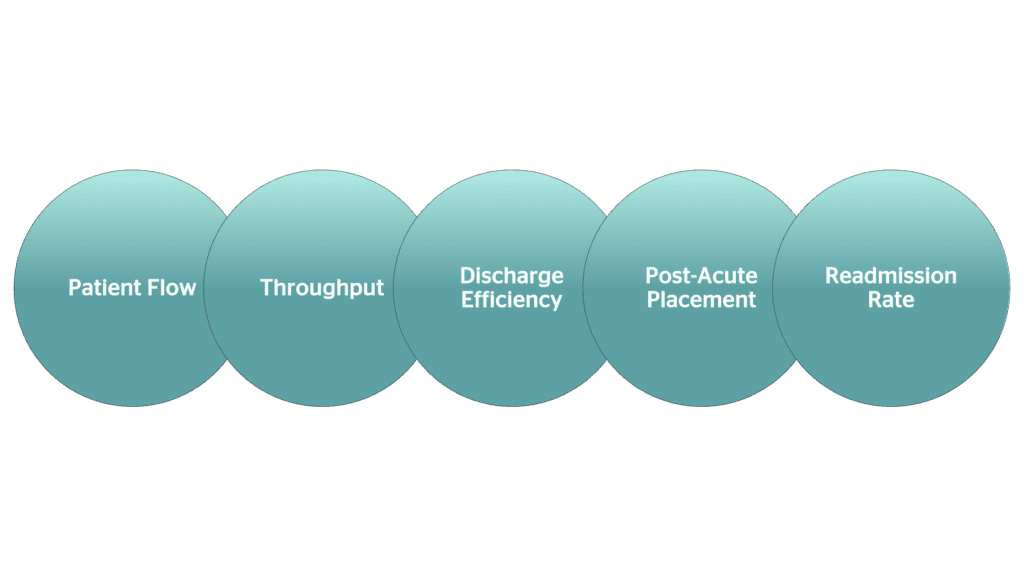
High-performance teams don’t try to track everything. They focus on a small set of metrics that impact the patient journey and review them together to identify breakdowns and where action will have the greatest impact.
1. Patient Flow
Flow reflects how patients move through care. Breakdowns lead to ED crowding, delayed transfers, staff strain, and poor patient experience. Case managers often see flow problems first, and are best positioned to intervene early.
2. Throughput
Throughput measures how efficiently capacity is converted into care. Length of stay, admission timing, and discharge execution signal whether capacity is usable or constrained. These outcomes are heavily influenced by early planning, barrier escalation, and discharge coordination—core case management work.
3. Discharge Efficiency
Discharge efficiency focuses on the gap between medical readiness and actual discharge. Even small delays have an outsized impact. Improving discharge efficiency isn’t about rushing patients. It’s about reliability, coordination, and clear accountability.
4. Post‑Acute Placement
Post‑acute placement is where delays quietly accumulate. When patients remain in acute beds waiting for the next level of care, costs rise and access suffers. Case management leads this work by coordinating across families, facilities, and payers, often days before issues surface in reports.
5. Readmission Rate
Readmissions signal how well transitions worked in the real world. Medication confusion, lack of follow‑up, and unmet social needs are common drivers. Strategies like teach‑back and proactive follow‑up led by case management play a critical role in preventing avoidable returns.
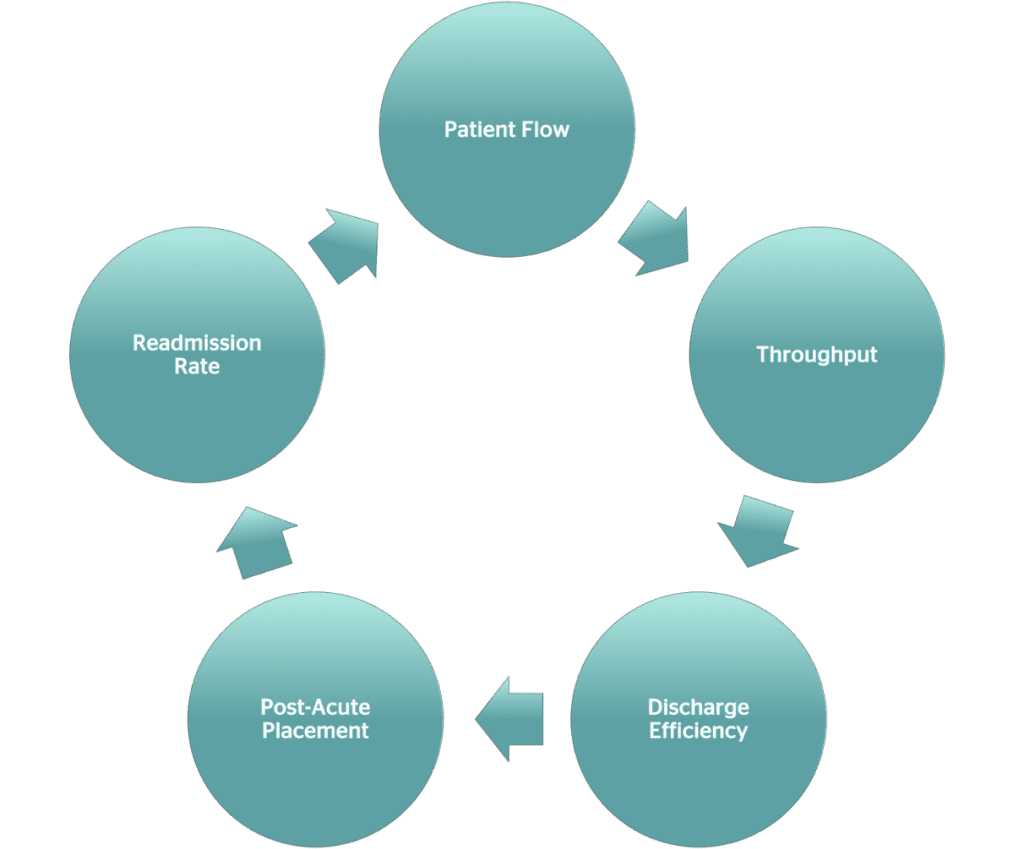
Metrics Move Together
Health system performance is interconnected. Delayed discharges affect throughput. Post‑acute delays slow patient flow. Poor discharge planning increases readmission risk.
Focusing on one metric in isolate often results in short-lived gains. Sustainable improvement comes from an end-to-end approach, from admission planning through post-acute follow-up.
What Strong Teams Do Differently
Hospitals that consistently improve these metrics share a few common practices:
- Plan early: Discharge planning starts on day one, not the day of discharge.
- Align teams: Daily communication across disciplines ensures shared ownership of outcomes.
- Make data actionable: Metrics are visible, standardized, and used in daily decision-making.
- Reduce manual work: Technology helps teams act sooner instead of chasing updates weeks later.
When metrics are embedded into workflows, they become signals for action, not reports for review.
Where Technology Makes the Difference
Metrics only drive improvement when teams can act on them in the moment, not weeks later, not after manual reconciliation, and not outside of daily workflows.
This is where the right technology matters. Not as another system to manage, but as an enabler of coordination, bringing together clinical readiness, post‑acute visibility, and real‑time progression so case managers can focus on anticipating barriers instead of chasing information.
When data flows across settings and transitions are visible end‑to‑end, metrics become something different. They stop being retrospective scorecards and start guiding real‑time decisions: where to focus today, which patients are at risk, and what action will move care forward safely.
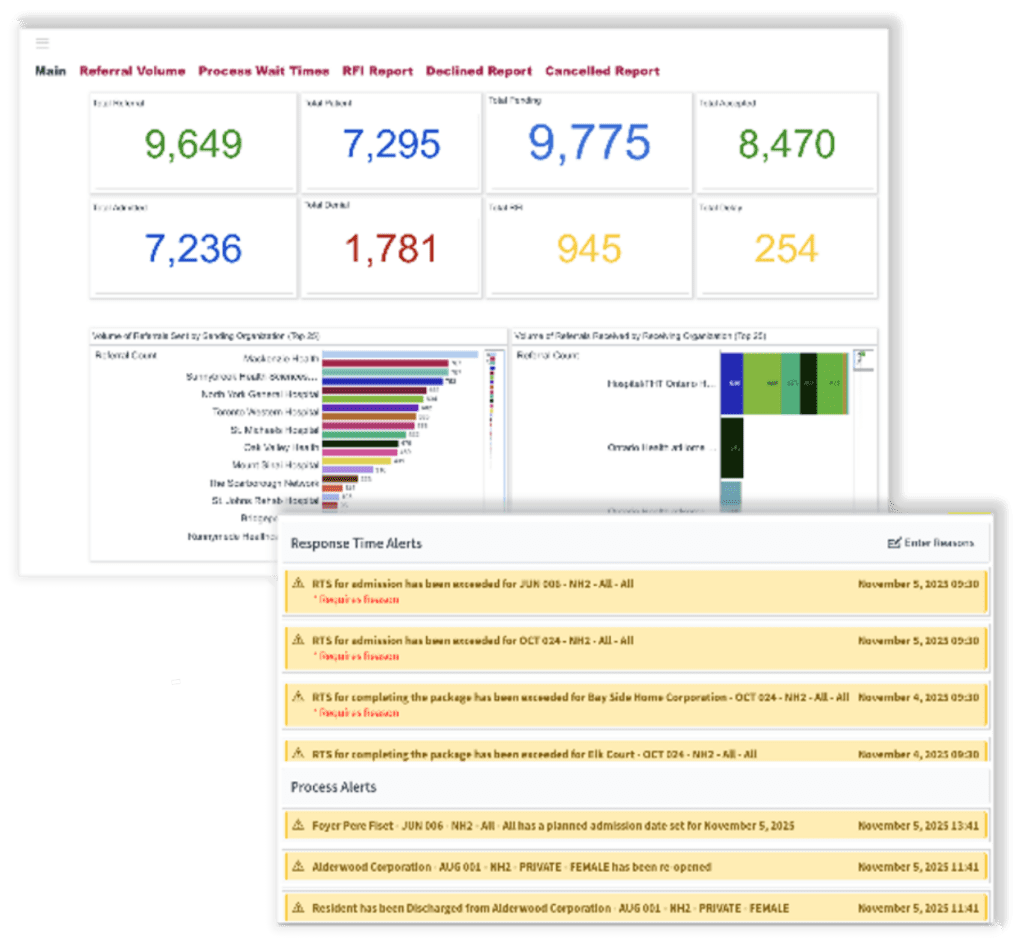
This is the shift Strata supports:
Helping health systems connect hospitals and post‑acute providers around shared insight, earlier planning, and coordinated execution.
The result is:
- Shorter, more appropriate stays
- Smoother transitions
- Lower avoidable cost
- Better experiences for patients and care teams alike
GET IN TOUCH
Ready to make your metrics usable, not just reportable?
Strata Health supports case management teams with software solutions that provide data you can trust, dashboards you can tailor, and reports you can act on, helping teams move from insight to earlier, safer transitions of care.