
 United States
 Canada

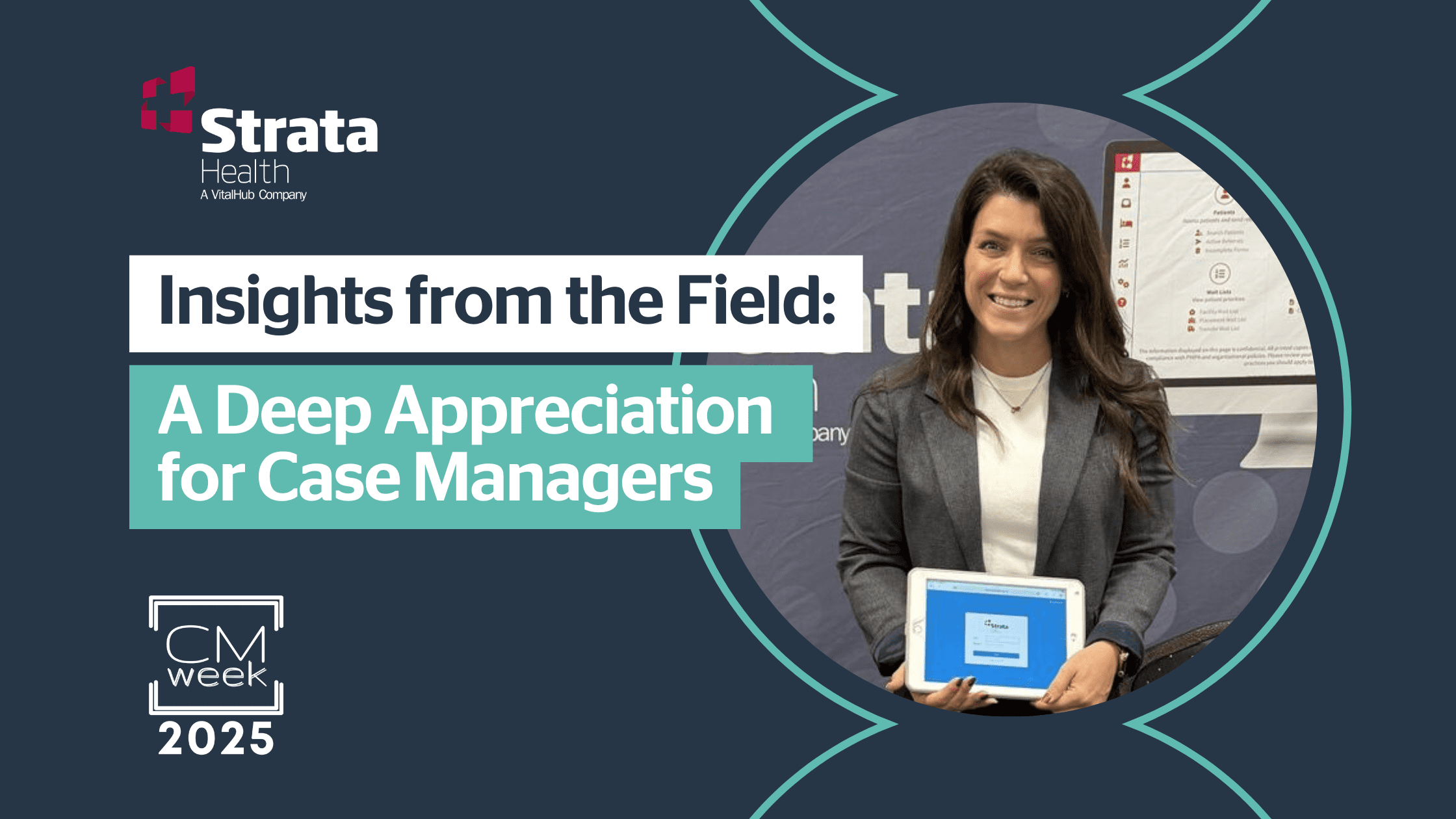
By Lindsey Garbarino, Sales Director, Strata Health US
As we celebrate National Case Management Week, I find myself reflecting on the incredible professionals at the heart of care coordination – case managers. When I joined Strata Health earlier this year, I expected to dive into the complexities of healthcare technology. What I didn’t anticipate was how profoundly I’d be impacted by the case management community and the essential role they play in patient care.
Over the past few months, I’ve attended national and regional American Case Management Association (ACMA) events, spoken with hundreds of case managers, and witnessed firsthand the compassion, intelligence, and drive that defines this profession.
Here are a few of the lessons I’ve learned, and why this week is such an important time to recognize and celebrate case managers everywhere.
1. Case Managers are Deeply Dedicated to Their Work
Every conversation I’ve had with a case manager has made one thing crystal clear: they care deeply about the work they do. These are individuals who show up every day ready to advocate for patients, coordinate complex care needs, and support families during some of the most vulnerable times of their lives. And they don’t just want to get the job done; they want to get it done well.
2. There’s a Hunger for Doing Things Better
One of the most refreshing things I’ve seen is the eagerness case managers have to improve. Whether it’s seeking out better workflows, adopting new tools, or learning from peers at conferences, they are continuously looking for ways to do things more efficiently, more compassionately, and with greater impact.
This mindset has made it incredibly rewarding to represent a company like Strata Health, whose solutions are built to support that very goal: helping case managers work smarter, not harder, so they can spend more time focused on what matters most, their patients.
3. A Community of Strength and Support
I’ve also been blown away by the strength of organizations like the ACMA and CMSA. Their events are more than just conferences, they’re energizing gatherings where case managers can learn, connect, and share. The ongoing education and networking opportunities are clearly valued, and the sense of community is palpable at every event.
4. Technology Should Support, Not Replace, the Human Element
One of the themes that comes up often in conversations is the balance between tech and touch. Case managers don’t want technology to replace them they want it to empower them. They’re looking for digital tools that eliminate manual tasks, reduce administrative burden, and surface insights that help them make faster, better decisions for their patients.
This is where I’ve seen Strata Health shine by offering solutions that align with what case managers actually need. Tools like Strata Search are designed to streamline workflows and improve outcomes, without ever losing sight of the human side of healthcare.
Celebrating the Champions of Care Coordination
This National Case Management Week, I want to say thank you to every case manager who works tirelessly behind the scenes to ensure patients receive the care they need. It’s our privilege at Strata Health to support your mission. I’m grateful to be on this journey, and even more grateful to be part of a company that stands behind the incredible work you do.

About the Author
Lindsey Garbarino is the U.S. Sales Director at Strata Health. She has worked in the healthcare industry for over 10 years in various roles, from direct patient care to administrative leadership, and now in a consulting capacity helping hospitals streamline discharge planning and care transitions. Lindsey is passionate about bettering the healthcare industry and supporting case managers as they navigate change. Connect with Lindsey on LinkedIn.